- Category
- Garden Design
- Year
- 2026
- Location
- Backyard
- Water saved
- 38%
The Carter family loved their house but never used the backyard. Half of it was bare clay that turned to mud every time it rained, the rest was patchy lawn that needed watering almost daily through the summer.
The yard sloped gently towards the house, so rainwater collected along the patio and the lower lawn never dried out. Two old shrubs blocked the view from the kitchen and there was nowhere comfortable to sit in the shade.
The family wanted three things: a lawn small enough for the kids to play on, planting that would not need constant attention, and a place to sit outside on warm evenings.
“Before Hijau Daun, the backyard was the part of the house we avoided. Now it’s where we eat dinner most nights from April to October.”
— Mark & Lisa Carter
The challenge
The real problem was not the plants but the water. Clay soil and the slope meant every storm left standing water, while summer heat burned the higher ground.
- Rainwater pooling against the patio and back door
- A thirsty lawn that needed daily watering in summer
- No shade or seating area close to the house
- Very little time for weekly garden work
Design & build
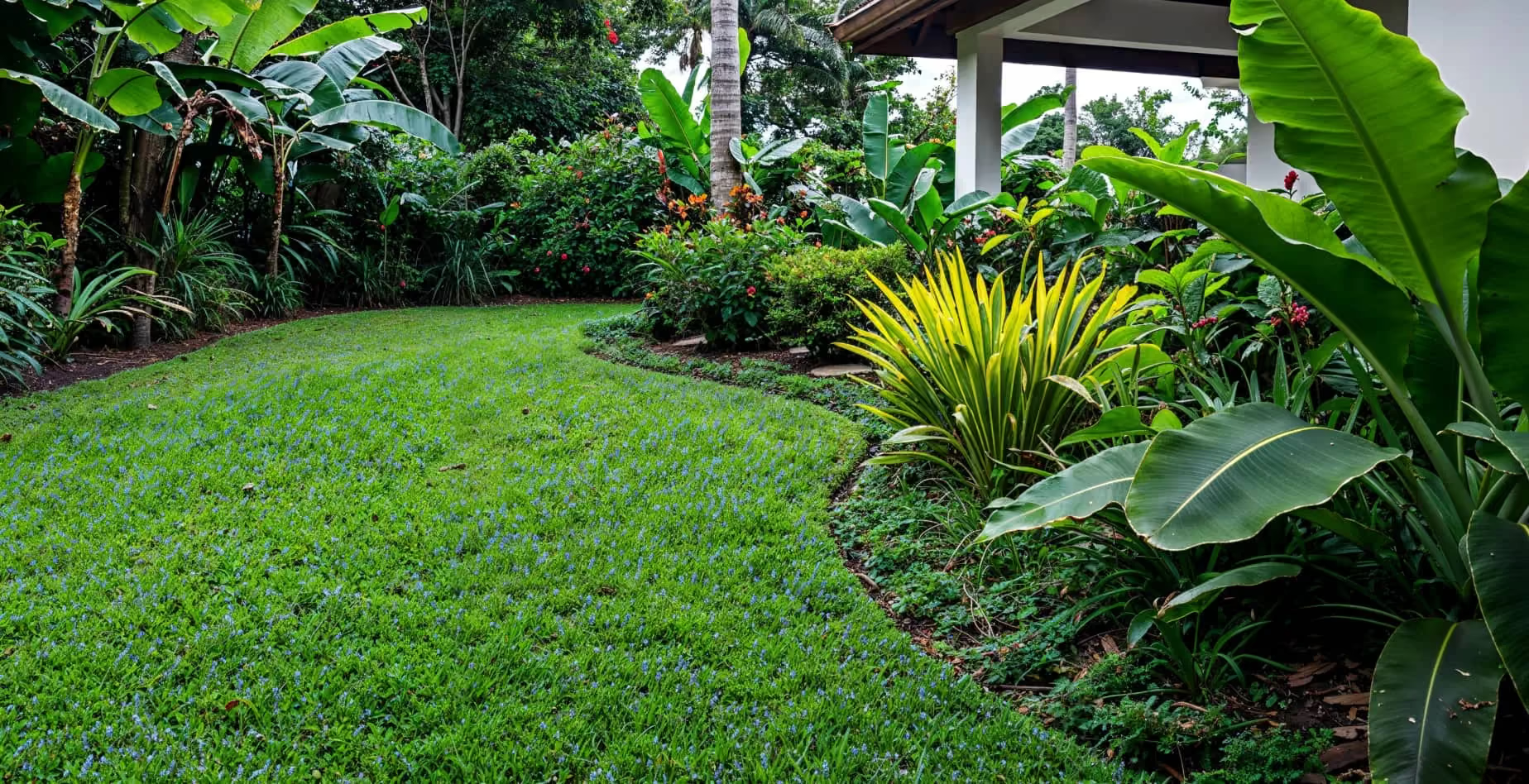
We regraded the lower third of the yard and added a gravel French drain that carries water to a planted rain garden in the corner. The lawn was reduced by 40% and re-laid with a drought-tolerant turf on improved soil.
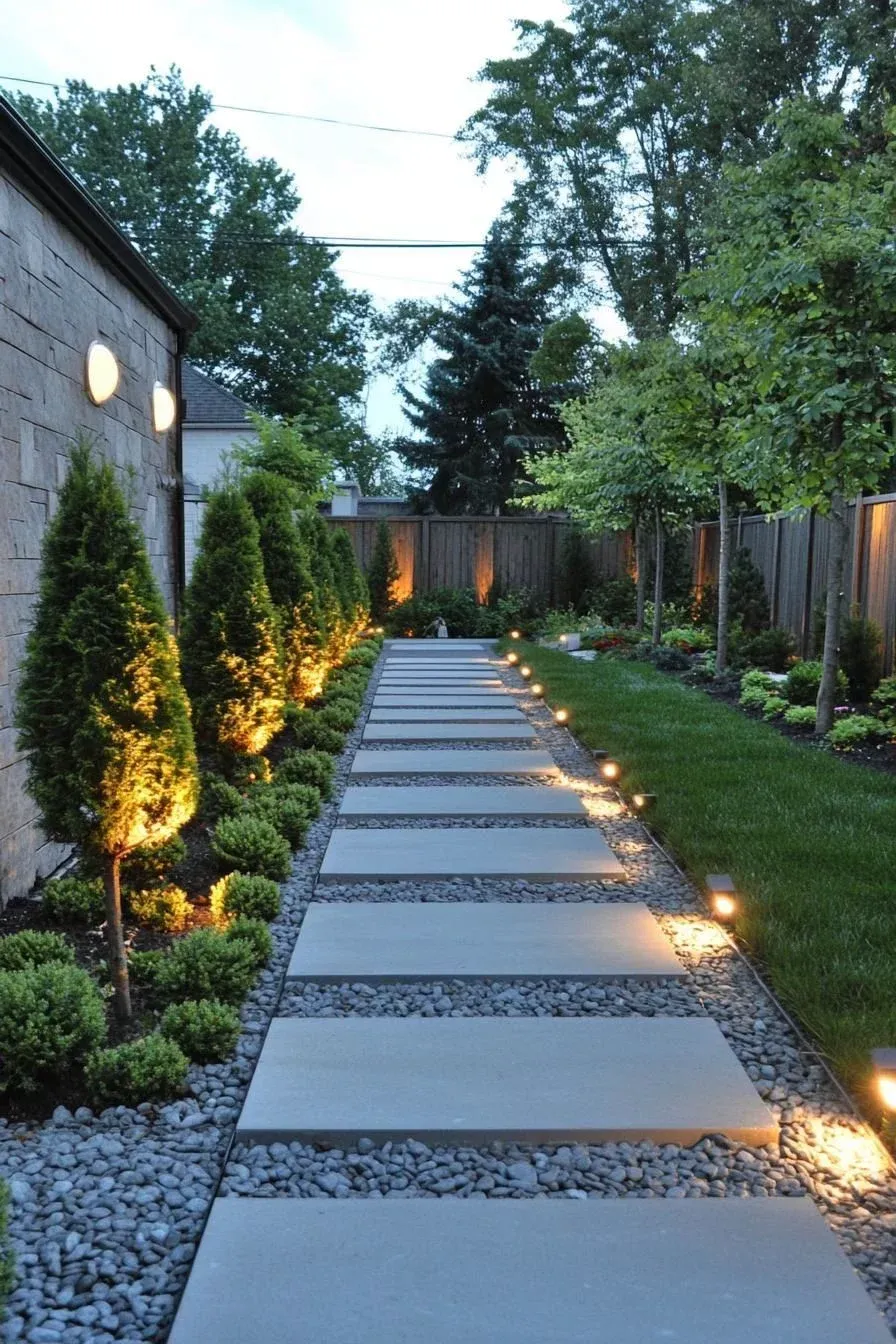 Layered borders of grasses and evergreen shrubs replaced the bare clay.
Around it we planted deep borders of native grasses, salvias and evergreen shrubs, mulched to hold moisture. A small gravel terrace with a pergola now sits where the old shrubs used to be, wired for warm low-level lighting along the path.
Results
Since handover the patio has stayed dry through every storm and the lawn needs watering only twice a week in peak summer. The borders filled in within one season and the family now books just a seasonal maintenance visit.
The best result is the simplest one: the backyard has become the room the family uses most.